
- The Exam-Day Reality Test: UPSC conducts GS1 and GS2 on Saturday (9 AM–12 PM and 2 PM–5 PM), and GS3 and GS4 on Sunday. Any note that cannot be scanned in 90 seconds during the 2-hour lunch break is too long for Mains revision.
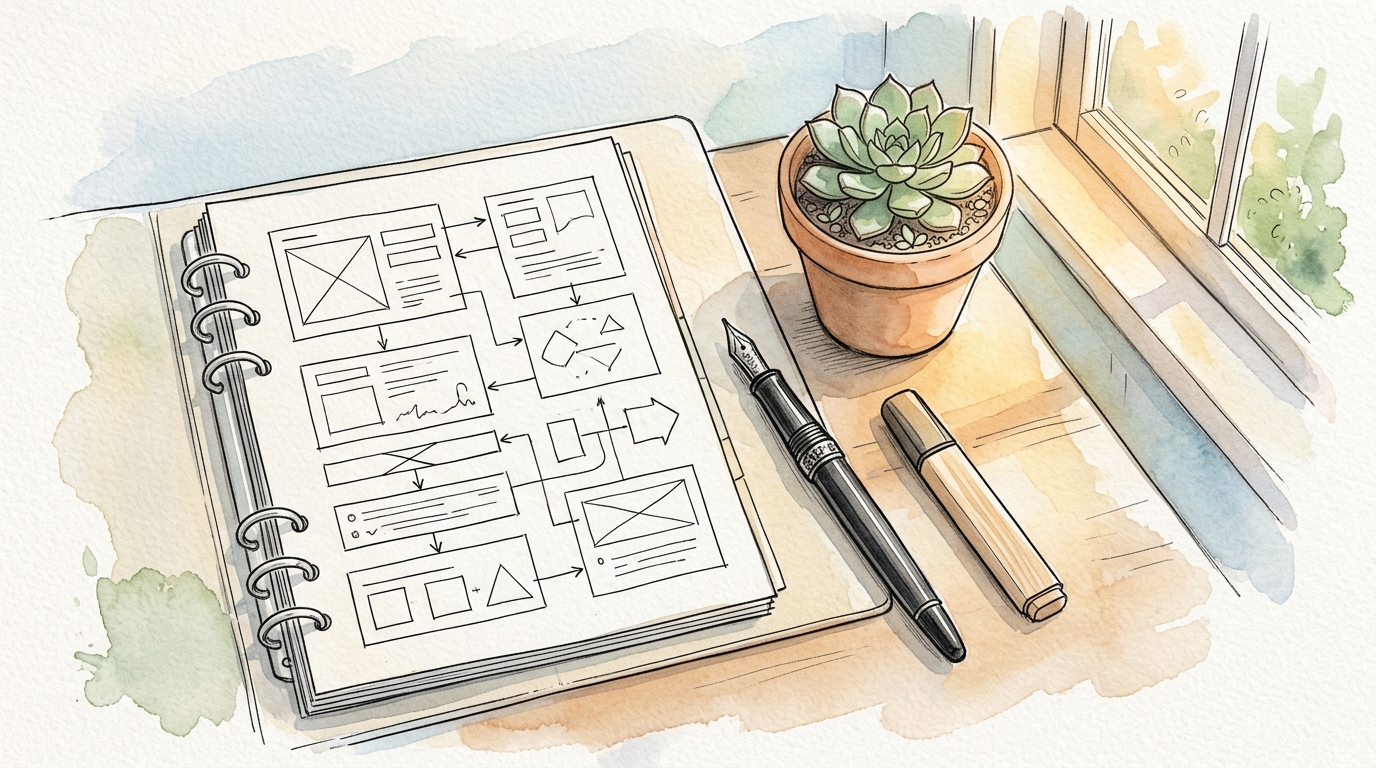
- The 60-Sheet Master Binder: The official UPSC Mains syllabus across GS1, GS2, GS3, and GS4 contains roughly 55 to 60 distinct macro-topics. If you create exactly ONE double-sided A4 sheet per syllabus line, your entire General Studies Mains revision fits in a 60-page binder.
- Never Write Full Sentences in Mains Notes: Your notes should contain only "Trigger Keywords, Data Anchors, Constitutional Articles/Cases, Committee Names, and 1 Pre-Drawn Diagram".
- Instant Note Extraction via 1-Click Answer Generator: Use Acme AI’s 1-Click Answer Generator on any past PYQ to extract ready-to-copy introductions, flowcharts, and Topper Copy value additions directly into your 1-page micro-sheet.
1. The 6-Box Micro-Sheet Architecture (Divide Every A4 Page Into 6 Quadrants)
Take a single unruled A4 sheet, write the exact verbatim UPSC Syllabus Line at the top (e.g., "GS3: Inclusive growth and issues arising from it"), and divide the page into 6 compact boxes:
Write one Definitional/Constitutional intro and one Empirical Data intro so you never waste 60 seconds thinking of an opening line in the exam hall.
Only numbers with sources (e.g., "NITI MPI: 24.82 Cr exited poverty; RBI FI-Index: 64.2; DBT savings: ₹3.48L Cr; PLFS FLFPR: 41.7%").
3–4 legal anchors to underline in your answer (e.g., Articles 38, 39(b)-(c), 46; Navtej Johar, Puttaswamy).
Write only the bold sub-point headers you will use in "Critically Examine" questions (e.g., "1. Jobless Growth; 2. Missing Middle MSMEs; 3. Digital Divide; 4. Informalization (85%); 5. Care Burden").
Draw the exact hub-and-spoke diagram, causal flowchart, or India map stencil you will reproduce in the exam.
2 ready-made concluding sentences citing a Commission report (e.g., Ashok Dalwai, Punchhi, 2nd ARC) and SDG targets.
2. How to Upgrade Your Micro-Sheets Using On-Script Red-Pen Feedback
Static notes go stale unless tested under timed writing pressure. Every time you evaluate a handwritten answer on Acme AI, look at two things: (1) Which missing dimension or case law did the On-Script Red-Pen flag? and (2) What extra value-addition did the Topper Copy linked in the 1-Click Answer Generator use? Add only those 2–3 missing keywords to your 1-page micro-sheet.
Passive Textbook Copying vs Active 6-Box Micro-Sheet Note-Making for UPSC Mains
| Note-Making Dimension | Passive Textbook/Coaching Summary (Low ROI) | 6-Box Syllabus Micro-Sheet (Topper Standard) |
|---|---|---|
| Total Page Volume (GS1–GS4) | 1,200+ pages across 10 thick registers; impossible to revise before Mains. | 60 crisp A4 sheets (15 sheets per GS paper); revisable in 3 hours. |
| Sentence Structure | Full paragraphs copied verbatim from books or monthly magazines. | 2-word bullet triggers, statistics, Articles, SC cases, and 1 boxed diagram. |
| Exam-Hall Utility | Requires mental translation from prose into answer structure during the test. | Pre-formatted into Intro, Sub-Headings, Visual, and Way Forward—ready to reproduce in 7 minutes. |
| Iterative Improvement | Never updated after writing; remains disconnected from PYQs. | Continuously refined after every Acme AI On-Script Red-Pen evaluation & Topper Copy review. |
Open any topic in the Acme AI Mains PYQ Vault, click "Generate 1-Click Answer" to extract the Topper Intro, Flowchart, Similar PYQs, and Topper Copy—then test your recall by uploading a timed handwritten answer for On-Script Red-Pen checking.
Write this answer on paper and upload to Acme AI for On-Script Red-Pen Checking, or use our 1-Click Answer Generator to view a complete UPSC Model Answer alongside Semantically Similar PYQs & Topper Copies.
Frequently Asked Questions
Should I make UPSC Mains notes digitally (Notion/OneNote/iPad) or on physical A4 sheets?
You can compile initial data points and Supreme Court cases digitally for fast searching, or use loose-leaf physical A4 binders. However, your final 60-sheet revision binder (especially your 20-second maps and hub diagrams) should be printed or hand-drawn on physical sheets so your visual-motor memory matches the physical Question-cum-Answer Booklet (QCAB).