
UPSC CSE Blogs & Examiner Blueprints
Deep-dive articles on Constitutional Doctrines, GS1–GS4 Mains Frameworks, Ethics Case Studies, and Prelims PYQ Heuristics—paired with On-Script Red-Pen AI Evaluation and 1-Click Model Answers.
All blogs in the category
Showing 28 examiner-verified UPSC CSE study blueprints

UPSC Mains Time Management: How to Finish All 20 Questions in 180 Minutes Without Dropping Quality
Leaving even two 15-mark questions blank costs 30 raw marks—virtually eliminating an IAS rank. Master the 7-Minute / 11-Minute Stopwatch Split, the 3-Hour Checkpoint Clock, and the 4-Minute Bouncer Protocol.
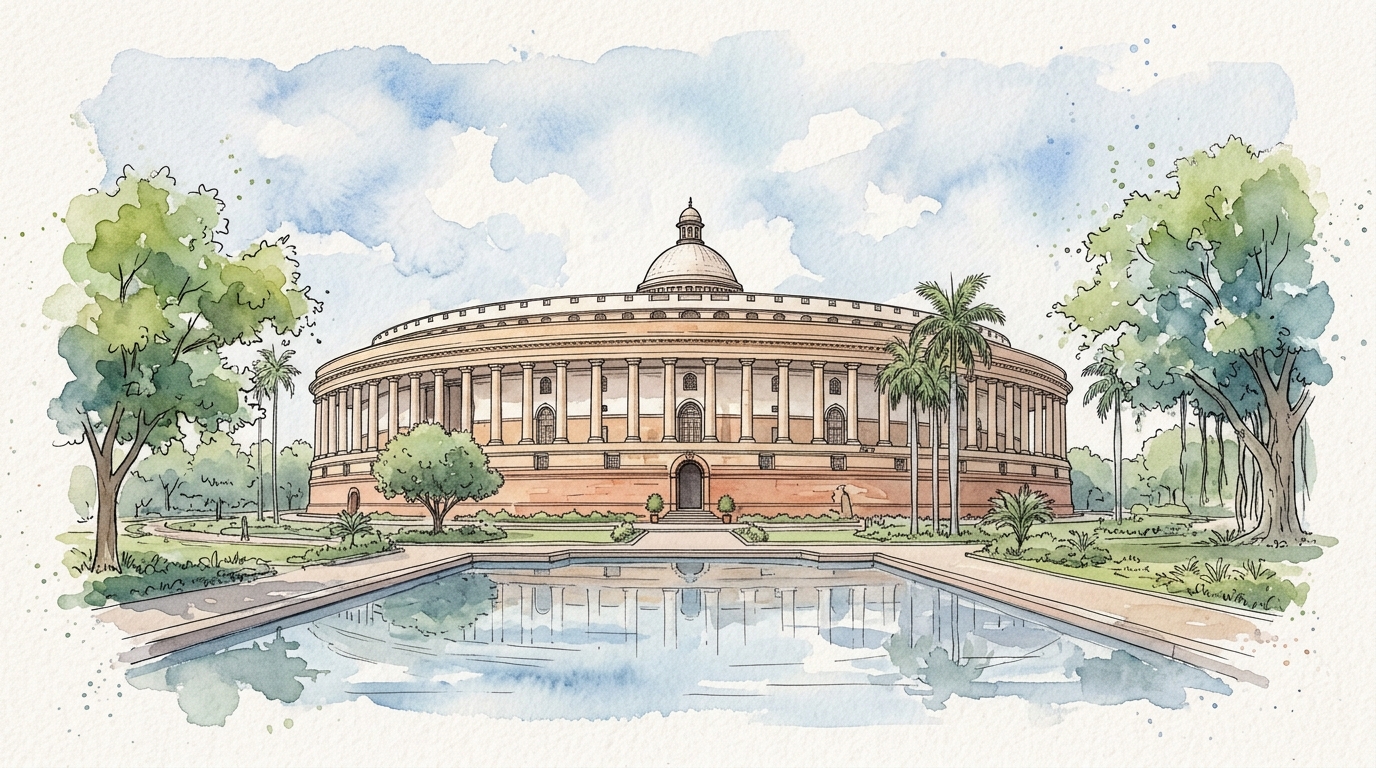
Parliamentary Committees in India: Role, Decline in Bill Referrals & UPSC Mains GS2 Guide
Described as "Mini-Parliaments" working away from partisan television cameras, Departmentally Related Standing Committees (DRSCs) and Financial Committees are a favourite UPSC GS2 theme. Master PRS legislative data, Articles 105 & 118, and Venkaiah Naidu’s reform blueprint.
UPSC Mains Directive Words Decoded: Critically Examine vs Analyze vs Elucidate vs Discuss
Writing a descriptive essay when the question asks you to "Critically Examine" caps your score at 40%. Learn the exact structural ratio, sub-heading split, and transition phrases for all 10 UPSC Mains directives.
Judicial Review, Judicial Activism & Judicial Overreach in India: UPSC Mains GS2 Blueprint
Where does legitimate constitutional protection end and judicial legislation begin? Master Articles 13, 32, 142 & 226, the evolution of Public Interest Litigation (PIL), and the thin red line of Separation of Powers (Article 50).
Constitutional Morality in India: Judicial Compass and UPSC Mains Guide
How to define, contextualize, and critically analyze Constitutional Morality vs Popular Morality in GS Paper 2 and Essay—with landmark Supreme Court judgments, structural flowcharts, and topper-grade intros.

How to Write High-Scoring Introductions & Conclusions in UPSC Mains (GS1–GS4 Templates)
Your first 30 words set your psychological score ceiling, and your last 30 words determine your final +0.5 bonus mark. Master the 4 Introduction Archetypes and 4 Conclusion Archetypes used by AIR 1–50 toppers.

Indian Monsoon Mechanism: El Niño, Indian Ocean Dipole (IOD), MJO & UPSC Mains GS1 Guide
Physical Geography in UPSC Prelims & Mains GS1 revolves around the Indian Monsoon. Master the Tibetan Plateau Jet Stream theory, how a Positive IOD neutralizes El Niño, Madden-Julian Oscillation (MJO), and climate-driven monsoon erraticism.
Basic Structure Doctrine: Evolution from Kesavananda Bharati to 50+ Years of Constitutional Balance
Trace the chronological arc from Shankari Prasad (1951) and Golaknath (1967) to Kesavananda Bharati (1973), Minerva Mills (1980), and I.R. Coelho (2007)—designed for high-scoring GS2 answers.
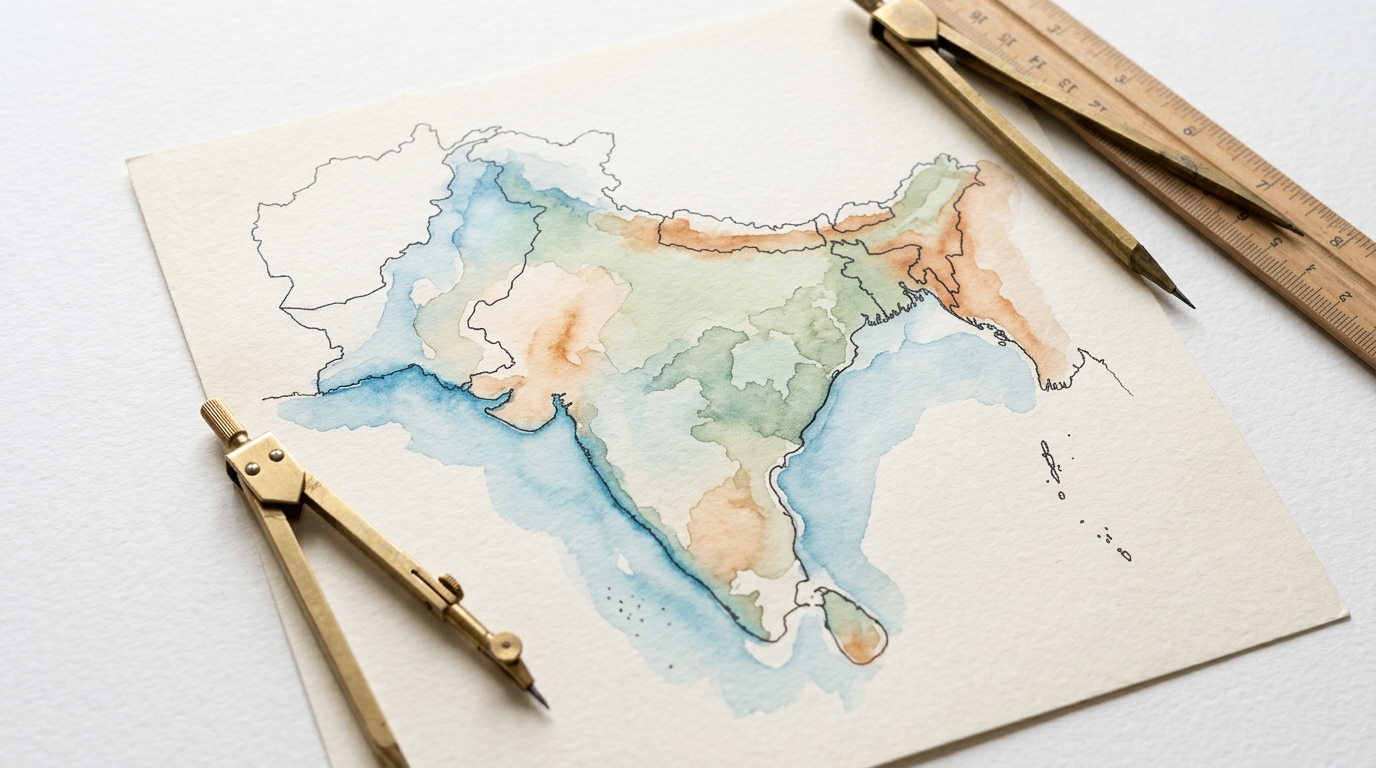
How to Use Diagrams, Flowcharts & 20-Second India Maps in UPSC Mains for +15 Extra Marks
A well-placed 20-second map or hub-and-spoke diagram breaks monotone text fatigue and earns +0.5 marks per question. Learn the 6 High-ROI Visual Archetypes—and how Acme AI’s Spatial Red-Pen AI score your hand-drawn visuals in red pen.
Women in Indian Society (UPSC Mains GS1): Female Labour Force (FLFPR), Care Economy & Nari Shakti Vandan Act
"Role of women and women’s organization" is tested every single year in UPSC Mains GS1 and Essay. Master Claudia Goldin’s U-Curve, NSSO Time-Use Survey data on unpaid care work, Feminization of Agriculture, and the 106th Constitutional Amendment Act.
80/20 High-Yield UPSC Mains Topics Across GS1, GS2, GS3 & GS4 (12-Year PYQ Cluster Analysis)
Not all syllabus lines are created equal. Our 12-year PYQ cluster analysis (2013–2024) reveals the exact 24 recurring thematic clusters across GS1–GS4 that account for over 70% of UPSC Mains marks every single year.

Internal Security for UPSC Mains GS3: Left-Wing Extremism (SAMADHAN), Cyber Dome & Grey-Zone Warfare
Internal Security accounts for 50 Marks (two 10-markers and two 15-markers) every single year in UPSC Mains GS Paper 3. Master the SAMADHAN doctrine against Left-Wing Extremism, Critical Information Infrastructure (NCIIPC), and Hybrid/Cyber Warfare.
Inclusive Growth & Digital Public Infrastructure (DPI) in India: UPSC Mains GS3 Blueprint
How India’s JAM Trinity, UPI, ONDC, and Account Aggregator stack are reshaping financial inclusion, MSME credit, and last-mile welfare delivery—with Economic Survey data and GS3 answer templates.

Emotional Intelligence & Civil Service Values in Administration: UPSC Mains GS4 Ethics Guide
Section A of UPSC Mains GS Paper 4 (130 Marks) tests your grasp of Emotional Intelligence, Nolan Principles, and Foundational Civil Service Values. Master Daniel Goleman’s 5-Pillar Model, Weberian Neutrality vs Constitutional Compassion, and real field examples.

How to Score 135+ in UPSC Mains Essay Paper: Philosophical vs Socio-Economic Essay Blueprint
The Essay paper (250 Marks) offers the highest marks-per-hour return in UPSC Mains. Learn how to deconstruct abstract philosophical quotes, build a 25-minute brainstorming grid, and write smooth transitions that earn 135–150 marks.

Indian Art & Culture for UPSC Prelims & Mains GS1: Temple Architecture (Nagara vs Dravida) & Bhakti-Sufi Synthesis
Art & Culture (25–35 Marks in GS1 + 5–7 MCQs in Prelims) rewards visual diagrams and socio-historical depth. Master Nagara vs Dravida vs Vesara temple geometry, Chola bronzes, and the egalitarian revolution of Bhakti and Sufi saints.
How to Solve Ethics Case Studies in UPSC Mains GS4: The 5-Step Topper Matrix
Stop writing repetitive, moralistic paragraphs in GS Paper 4 Section B. Learn the exact 5-step administrative framework (Stakeholder-Dilemma Matrix, Constitutional Anchors, and Pragmatic Options) that pushes GS4 scores to 125+.

Disaster Management in India (UPSC Mains GS3): Himalayan GLOFs, Wayanad/Joshimath Landslides & Sendai Framework
UPSC Mains GS3 tests Disaster Management (25–30 Marks) through contemporary ecological tragedies—from the Sikkim South Lhonak GLOF and Joshimath subsidence to Western Ghats landslides. Master NDMA guidelines, the Sendai Framework, and PM’s 10-Point Agenda.

Cooperative & Competitive Federalism in India: Role of Governor, Fiscal Devolution & GS2 Mains Guide
Federalism is the single most tested theme in UPSC Mains GS Paper 2. Master Article 200 (Governor’s assent to bills), 16th Finance Commission fiscal fault lines, Seventh Schedule tensions, and Sarkaria/Punchhi reforms.

Indian Agriculture for UPSC Mains GS3: Cropping Patterns, MSP Reform & Climate-Resilient Farming
Agriculture & Food Processing consistently accounts for 40 to 50 marks (4 questions) every single year in UPSC Mains GS Paper 3. Master the Cereal-Trap diagnostics, MSP vs Price Deficiency Payment, Shree Anna (Millets), and Dalwai Committee reforms.
How to Score 420+ in UPSC GS Mains: The On-Script Red-Pen Feedback Loop
Why writing 50 unreviewed test papers fails—and how combining On-Script Red-Pen AI Evaluation with 1-Click Model Answers, Similar PYQs, and Topper Copy benchmarking compresses 6 months of improvement into 4 weeks.
Electoral Reforms, Anti-Defection Law (10th Schedule) & Simultaneous Elections: UPSC Mains GS2 Guide
"Salient features of the Representation of People’s Act" is an explicit syllabus line in UPSC Mains GS2. Master the Tenth Schedule (Anti-Defection Law), Supreme Court rulings on Electoral Bonds & Criminalization of Politics, and the Kovind Committee on Simultaneous Elections.

Urbanization in India (UPSC Mains GS1): Urban Flooding, Sponge Cities & 74th Amendment Reforms
"Urbanization, their problems and their remedies" is a guaranteed 25–30 mark theme in UPSC Mains GS Paper 1 (and overlaps with GS3 Disaster Management). Master Pluvial Flooding, Urban Heat Islands, Sponge Cities, and 3F Municipal Empowerment.
How to Start UPSC Mains Answer Writing from Zero: The 90-Day Beginner-to-Ranker Roadmap
Waiting until "100% syllabus completion" to write your first answer is the #1 trap in UPSC preparation. Follow this 3-phase, 90-day roadmap to transition from blank-page anxiety to writing 15-mark PYQs in 10.5 minutes.
UPSC Prelims PYQ Mastery: Scientific Option Heuristics & NCERT Root Mapping (2015–2025)
Why cheap "elimination tricks" failed in UPSC Prelims 2023 & 2024—and how to replace blind guessing with Concept-First NCERT Root Mapping, Statement-Logic Deconstruction, and 30-Year PYQ Theme Clustering.

How to Make Crisp 1-Page Syllabus Notes for UPSC Mains Revision (The 120-Word Micro-Sheet Method)
In the 2-hour break between GS Paper 1 (morning) and GS Paper 2 (afternoon) on UPSC Mains exam day, you cannot revise a 500-page notebook. Learn how to condense every UPSC syllabus line into a single 6-Box Micro-Sheet.
How to Score 300+ in UPSC Mains Optional Subject: Paper 1 vs Paper 2 Answer Writing Strategy
Your Optional Subject (500 Marks) has the widest score variance in UPSC Mains—ranging from 210 to 325+. Learn the Scholar Triangulation Rule, the Paper 1–Paper 2 Interlinking Matrix, and the 10-Mark Compulsory Question strategy.
10 Fatal UPSC Mains Answer Writing Mistakes (And How On-Script Red-Pen AI Fixes Them)
We analyzed 50,000+ handwritten UPSC Mains answer scripts evaluated on Acme AI. Here are the 10 recurring structural and spatial blunders that quietly drain 45 to 60 marks across GS1–GS4—and how to eliminate each in 7 days.
Turn Every Blog Blueprint Into a +15 Mark Mains Advantage
Upload your handwritten answer sheet to experience #1 On-Script Red-Pen Human-Like Checking directly on your handwriting, plus #2 1-Click Answer Generation that creates a UPSC-grade model answer and recommends Semantically Similar PYQs & Topper Copies.